
Short answer: If your child says they are being bullied, listen to the whole story first and write down what happened. Do not rush to tell them to hit back, and do not confront the other child yourself. Then talk to the homeroom teacher or the student affairs office. If the school does not act, you can file a formal report under Taiwan's Campus Bullying Prevention Regulations or call the Ministry of Education's 24-hour hotline, 1953.
When a child comes home saying "some kids keep laughing at me" or "nobody plays with me at recess," most parents ask the same questions. Is this bullying, or just kids being kids? What should I do tonight? Would a sport like taekwondo help?
This guide helps you make three decisions: whether it is bullying, what to do next, and what a sport can and cannot do. We run a taekwondo school, but we will not tell you that taekwondo stops bullying. That would not be true.
The guide is written for families whose children attend school in Taiwan, including international families in Taichung. Rules and hotlines differ in other countries.
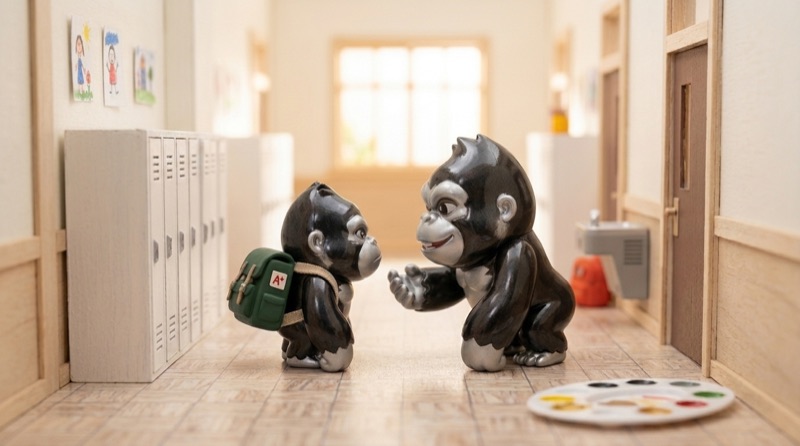
What counts as school bullying in Taiwan?
Taiwan's Ministry of Education defines bullying in Article 4 of the Campus Bullying Prevention Regulations (校園霸凌防制準則). It is repeated, intentional behavior by one person or a group, through words, images, physical actions, or the internet, that belittles, excludes, harasses, or mocks someone. It creates a hostile environment and causes mental, physical, or property harm, or disrupts learning.
Three points in this definition are easy to miss:
- It does not have to be physical. Mocking nicknames, deliberately leaving a child out, and sharing embarrassing photos in a group chat all fall within the definition.
- It does not have to happen on campus. Bullying between students counts as "campus bullying" whether it happens at school, after school, or online.
- The key words are "repeated" and "intentional." One argument or one accidental bump is usually not bullying. Behavior that keeps happening, after the other child knows it hurts, should be taken seriously.
The regulations were revised in April 2024. The revision separated student-to-student cases from staff-to-student cases and added a "reconciliation" procedure, explained below.
What kind of bullying is most common?
A 2024 survey of 16,346 junior and senior high school students by the Child Welfare League Foundation (兒福聯盟), a Taiwanese children's charity, found that 10.2% had been bullied at school in the past year. Verbal bullying was the most common type at 64.9%, followed by relational bullying (exclusion and isolation) at 24.5%.
Globally, the picture is similar. UNESCO data published in 2018 showed that almost one in three young teens had recently been bullied.
In other words, most bullying is not fighting. It is words and social exclusion. That shapes what parents should watch for and what children need to learn.
| Type | What it looks like | Why parents miss it |
|---|---|---|
| Verbal | Cruel nicknames, mocking someone's appearance or family, threats | No visible marks; children feel embarrassed to tell |
| Relational | Leaving a child out, telling others not to play with them, spreading rumors | It can look like "they just don't have friends" |
| Physical | Pushing, kicking, hitting, taking or breaking belongings | Children may say they fell |
| Cyber | Exclusion from group chats, sharing embarrassing photos, anonymous attacks | It happens on a phone and does not stop after school |
Is it ordinary conflict or bullying?
Look at three things: whether the two sides are equal, whether it keeps happening, and whether it stops when one child says no. Two children who argue and make up the next day are having a conflict. One child who is targeted again and again by the same group, with "stop" having no effect, is much closer to bullying.
The definition used in US research by the US Centers for Disease Control and Prevention and the US Department of Education rests on the same ideas. It looks for unwanted aggressive behavior, a real or perceived power imbalance, and repetition or a high likelihood of repetition.
| Look at | More like conflict | More like bullying |
|---|---|---|
| The relationship | Roughly equal; both sides argue back | One side has more people, more power, or more popularity |
| How often | Once in a while, then they make up | Repeated, aimed at the same child |
| After "stop" | It usually stops | It continues or gets worse |
| How your child feels | Angry, but not afraid of school | Afraid, avoids school, feels something is wrong with them |
This table is a way to organize your thinking, not an official finding. Under the regulations, a school committee investigates and decides whether bullying occurred.
How can you tell if your child won't say?
Many children do not report bullying. They feel ashamed, worry about being called a snitch, or fear things will get worse. Watch for changes: unexplained injuries, belongings that keep disappearing or breaking, frequent morning headaches or stomach aches, poor sleep, not wanting to go to school, or friends who suddenly disappear from conversation.
StopBullying.gov, run by the US Department of Health and Human Services, lists warning signs on both sides. Your child could also be the one doing the bullying, and both deserve attention:
| May be bullied | May be bullying others |
|---|---|
| Injuries they cannot explain | Frequent verbal or physical fights |
| Lost or damaged clothes, books, or devices | Friends who bully others |
| Frequent headaches, stomach aches, or faking illness | Increasingly aggressive |
| Trouble sleeping or nightmares | Often sent to the principal's office |
| Falling grades, not wanting to go to school | Unexplained extra money or new belongings |
| Sudden loss of friends, avoiding groups | Blames others for their problems |
| Feeling helpless, lower self-esteem | Very worried about popularity |
The Child Welfare League survey found that bullied students most often felt isolated (53.1%), had lower self-esteem (48.6%), or felt helpless (44.8%). 30.1% had trouble sleeping, and 22.5% had thought about suicide or self-harm. If your child talks about not wanting to live or hurting themselves, do not wait. Get professional help right away. In Taiwan, the Ministry of Health and Welfare runs a 24-hour mental health support line: 1925.

Your child has told you. What now?
Listen to the end without interrupting or jumping to conclusions. Tell your child: "Thank you for telling me. This is not your fault, and we will figure it out together." Then write down the date, place, who was involved, and what happened. Screenshot any online messages. These records matter when you talk to the school.
- Hear the whole story. The American Academy of Pediatrics advises parents to ask exactly what happened and when, listen with love, and let the child know you will help find solutions. If your child is not ready to talk, tell them you are there whenever they are.
- Do not blame your child. Questions like "What did you do to make them dislike you?" teach a child not to tell you next time.
- Keep records. Dates, places, names, what was said or done, and any witnesses. Photograph injuries and screenshot messages.
- Do not confront the other child or their parents yourself. A heated face-to-face meeting can turn into a conflict between adults, and your child pays for it at school.
- Do not post about it publicly first. Naming people on social media can create legal problems and exposes your child's situation to even more people.
How do you work with the school?
Start with the homeroom teacher and bring your records. If nothing improves, go to the student affairs office or the counseling office. The bullied student, their legal guardian, or their actual caregiver can all file a formal report with the school (Article 18). Any school staff member who learns of suspected bullying must report it internally within 24 hours (Article 17).
| Channel | When to use it |
|---|---|
| Homeroom teacher | When you first notice a problem; ask the teacher to watch and step in |
| Student affairs or counseling office | When talking to the teacher has not helped, or the situation is serious |
| Formal report to the school | When you want the school to start the procedure under the regulations |
| MOE anti-bullying hotline 1953 | Answered 24 hours a day; useful if you are unsure how to start, or the school has not acted |
| MOE anti-bullying website | Online message board for reports, plus the related rules (in Chinese) |
Most school and ministry services operate in Mandarin. If language is a barrier, consider bringing a Mandarin-speaking friend or relative to meetings.
What are "reconciliation" and "investigation"?
Under the 2024 revision, the two sides in a student-to-student case can choose a reconciliation procedure or an investigation procedure (Article 29).
- Reconciliation happens only when both sides agree. A school committee guides the conversation from a neutral position, helps the families find a solution, and works to repair the relationship. It stops if either side withdraws, if there is a clear power imbalance, or if no agreement is reached within one month (Article 32).
- Investigation means the committee investigates and decides whether bullying occurred. It must finish its report within two months of its first meeting. It may extend that deadline up to two times, by no more than one month each time (Article 43).
When you meet the school, bring your records, stick to facts, and say clearly what you would like the school to do. You might ask for a seating change, more supervision at recess, or a formal procedure. That works better than expressing anger alone.
Should you teach your child to fight back?
For everyday bullying, we do not recommend it. Fighting back can get your child hurt. It can also turn "my child was bullied" into "both children hit each other," which is harder to resolve. A better approach is to teach your child to say "stop" firmly, walk away calmly, and tell a teacher. But when a child's physical safety is threatened, protecting themselves comes first. Resisting is the right thing to do, with the goal of getting away and getting help.
The American Academy of Pediatrics suggests an easy-to-remember method called Stop, Walk, Talk:
- Stop. Tell the other child to stop in a firm voice: "Not cool," or "Enough."
- Walk. Walk away calmly and with confidence.
- Talk. Tell a trusted adult who can help, such as a teacher or parent.
These steps sound simple, but for a child who is being bullied, the first one is often the hardest. It means standing steady, looking at the other child, and saying "stop" out loud. That is why many parents start thinking about a sport like taekwondo.
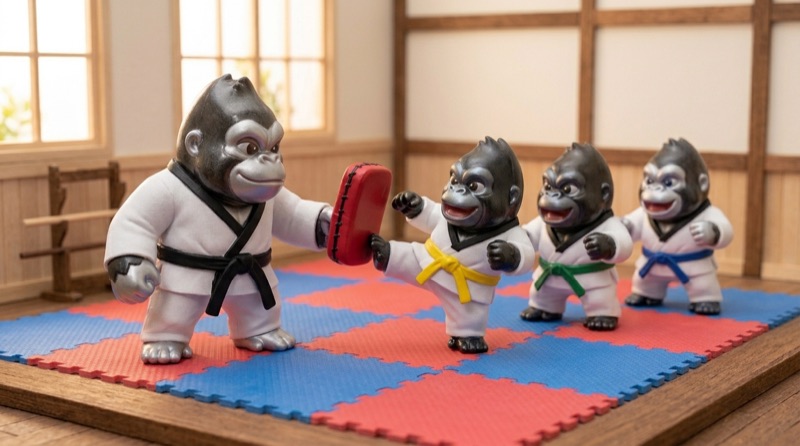
What can taekwondo do about bullying, and what can't it do?
To be honest, taekwondo does not guarantee that a child will not be bullied, and it should not be treated as a way to hit back. What it can offer is indirect. A child trains in a structured group, builds fitness, practices answering commands in a loud voice and standing firm, and spends time with peers. The bullying itself still has to be handled by parents and the school.
| What parents hope | Our view |
|---|---|
| "Once they learn it, no one will bully them" | Not realistic. Most bullying is verbal or social, and kicking skills do not change that directly. |
| "They can hit back when someone bullies them" | It depends. For everyday bullying, we tell children to tell a teacher and let the school handle it. Taekwondo is a self-protection sport, and resisting is right only when their physical safety is threatened. |
| "Somewhere outside school to make friends" | Realistic. A child who struggles socially at school may find peers with a shared interest at the dojang. |
| "Practice standing firm and speaking up" | Realistic. Students answer commands and shout during class. It is the same skill as saying "stop" out loud. |
| "A place to put their energy" | Realistic. For very active children, sport is an outlet with clear rules. |
From our founder: some children join because of bullying
Several children at our school signed up because they were being bullied at school. After training for a while, I asked them, and they all said they were no longer being bullied.
When a child is bullied, I usually tell them to tell their teacher and let the teacher and the school handle it, unless their physical safety is threatened. Taekwondo is a self-protection sport. When your safety is threatened, you should resist.
— Yuan Ming-che, founder, Yuan Power Taekwondo
This is what the children told us, not the result of a study. Every child's situation is different, and help from parents and schools may also play a part. But it shows something useful: taekwondo and "tell a teacher" do not conflict. Everyday bullying goes to adults and the school. In real danger, a child knows they can protect themselves.
If you want your child to try it
Children who have been bullied are sometimes wary of joining a new group. Ask your child first. Avoid saying things like "You got bullied because you're weak, so go train." That tells them, once again, that the problem is them.
Yuan Power Taekwondo groups classes by age. The Kids Class for ages 3 to 6 focuses on movement and games, and elementary school children can start in the Basic Class. To see the space first, you can book a trial class. Parents can watch from the side, and there is no need to decide on the day. Our other pages are currently available in Chinese only.
Five common mistakes parents make
The most common mistakes come from good intentions. Parents tell the child to put up with it or to hit back, confront the other child, post about it online, or react so strongly that the child stops telling them things. These responses usually leave a child more alone or make the situation harder to fix.
- "Just ignore them." This can work for a one-off incident. For repeated bullying, it tells a child that adults will not help.
- "If they hit you, hit them back." Your child could get hurt, or end up as the one facing discipline.
- Confronting the other child. An adult pressuring someone else's child easily creates a new conflict.
- Going public online first. It may cause legal trouble and takes away your child's privacy.
- Reacting more strongly than your child. If a child sees a parent become furious or distraught, they may decide not to say anything next time.
Frequently asked questions
Should I tell my child to hit back if they are bullied?
For everyday bullying, we do not recommend it. Hitting back can get your child hurt and can turn the case into one where both children were physical, which makes it harder for the school to resolve. Teach three steps instead: say "stop" in a firm voice, walk away calmly, and tell a teacher or parent. Meanwhile, keep a record of what happened and raise it with the homeroom teacher or student affairs office. But if your child's physical safety is threatened, protecting themselves comes first: resisting is right, with the goal of getting away and getting help.
Can taekwondo stop my child from being bullied?
There is no guarantee. Most school bullying is verbal mocking and social exclusion, which kicking skills do not change directly. Taekwondo can help indirectly: structured exercise in a group, practice standing firm and speaking up, and friendships outside school. Dealing with the bullying itself still depends on parents keeping records, working with the school, and, when needed, filing a formal report under Taiwan's Campus Bullying Prevention Regulations. Treat a sport as one form of support, not the answer.
How do I know if my child is being bullied at school?
Many children never say it directly, so watch for changes: unexplained injuries, belongings that keep going missing or breaking, frequent morning headaches or stomach aches, poor sleep, falling grades, reluctance to go to school, or friends who suddenly stop coming up. A casual question like "Who do you hang out with at recess these days?" often opens the conversation better than "Is someone bullying you?" If your child mentions wanting to hurt themselves, get professional help immediately.
The school says it's just kids playing around. What can I do?
Organize your records first: dates, places, who was involved, what happened, any witnesses, and photos or screenshots. Then explain to the school that it keeps happening and does not stop when your child says no. The bullied student, their legal guardian, or their actual caregiver can file a formal report with the school under the regulations. If you feel the school is not acting, call the Ministry of Education's 24-hour hotline, 1953, or use the ministry's anti-bullying website.
Will taekwondo make my child aggressive or more likely to bully others?
Taekwondo is a martial art built on etiquette, and every class begins with a bow. Kicks are aimed at pads and protective gear. For sparring, students must wear a full set of protective gear, and anyone missing a single piece does not spar. A coach stays beside them the whole time, watching out for every student's safety. Students also learn to follow commands and wait their turn, which is practice in self-control. Any child can still clash with classmates. If you notice aggressive behavior at school, talk with both the coach and the teacher rather than relying on either one alone.
Summary
When a child is bullied, the most important thing a parent can do is make sure the child knows that telling you was the right choice. Then keep records and go through the homeroom teacher and the student affairs office. When needed, file a formal report or call 1953 so the school starts its procedure. For everyday bullying, do not tell your child to hit back, and do not confront the other family yourself.
Sport, including taekwondo, can help a child rebuild fitness and find peers, but it is support, not a solution. If you have questions, you are welcome to message us on LINE.
Sources
- Ministry of Education, Taiwan. Campus Bullying Prevention Regulations (校園霸凌防制準則), Laws & Regulations Database, amended April 17, 2024 (Articles 4, 17, 18, 29, 32, 43). In Chinese.
- Ministry of Education, Taiwan. Campus anti-bullying website (hotline 1953 and online reporting). In Chinese.
- Child Welfare League Foundation. 2024 Taiwan Campus Bullying and Trauma-Informed School Survey. In Chinese.
- American Academy of Pediatrics, HealthyChildren.org. Why Bullying Hurts All Children—and What Parents Can Do About It.
- StopBullying.gov, US Department of Health and Human Services. Warning Signs for Bullying.
- UNESCO. New data reveal that one out of three teens is bullied worldwide (2018).